
How Durham People Search Works
A name alone can produce several Durham matches. Start with the record most likely to contain a second fact, such as an address, event year, parcel number, or case number. Durham County owns the deed, tax, election, and Durham vital-record paths. The City of Durham keeps council actions, cemetery deeds, permit material, and many municipal files. North Carolina runs the statewide court, business, professional-license, correction, and unclaimed-property systems.
A short, ordered search makes each later match stronger. Keep spelling variants and initials, since older Durham sources may list a spouse, trade, firm, or street instead of a full modern name.
- Search the Durham property roll by owner or address, then save the parcel ID and deed book and page.
- Check the recorded deed parties and use the newest transfer date to place the owner in time.
- Search Durham court parties, estates, and special proceedings. Filter by Durham County and compare case dates.
- Use Durham voter, business, license, custody, or unclaimed-property records only when that record type fits the question.
- Move to the Durham library, state archives, courthouse, or custodian access when the online trail ends.
Do not treat one same-name result as proof. Two independent Durham records that share a date, address, relative, organization, or parcel form a much safer identification.
Note: A Durham postal address can fall outside city limits or even Durham County, so confirm parcel jurisdiction before choosing a custodian.
Durham Search Offices and Custodians
Durham does not have one clerk who holds every person record. The Durham Register of Deeds records land instruments, plats, assumed names, marriage licenses, and local birth, death, and marriage certificates. The elected Durham Clerk of Superior Court keeps District and Superior Court files, estates, guardianships, foreclosures, name changes, and other special proceedings. The Durham City Clerk records council acts, board appointments, cemetery deeds, and certified city documents.
Durham County Register of Deeds
201 E. Main Street
Durham, NC 27701
919-560-0480
ROD Self-Service Web
Durham Clerk of Superior Court
510 S. Dillard Street
Durham, NC 27701
Durham County Courts
Durham Tax Administration and Land Records form another county branch. They connect Durham owner names to parcel maps, January 1 ownership, mailing and site addresses, values, sales, and deed references. Durham Board of Elections handles local registration, precinct, and election material under state election law. Sending a Durham request to the true holder avoids a needless transfer or denial.
Durham Property Search by Owner
Property records are often the fastest route from a Durham name to a place. The Durham County Real Property Records Search accepts an owner name, physical property address, parcel ID or REID, and other account criteria. A Durham parcel card can show the January 1 owner, co-owner, taxpayer mailing address, physical site address, legal description, deed reference, photo, values, tax jurisdiction, recent sales, tax bill, and GIS link.
| Search field | Best use | Reading the result |
|---|---|---|
| Owner name | Locate parcels tied to a person or firm | Try a surname or business fragment |
| Property address | Move from place to named owner | This is the physical, or situs, address |
| Parcel ID or REID | Return an exact tax record | Best key for GIS and deed follow-up |
| Map or account criteria | Resolve older or alternate references | Availability depends on the search mode |
Open the Durham County owner and parcel search before viewing the captured interface.
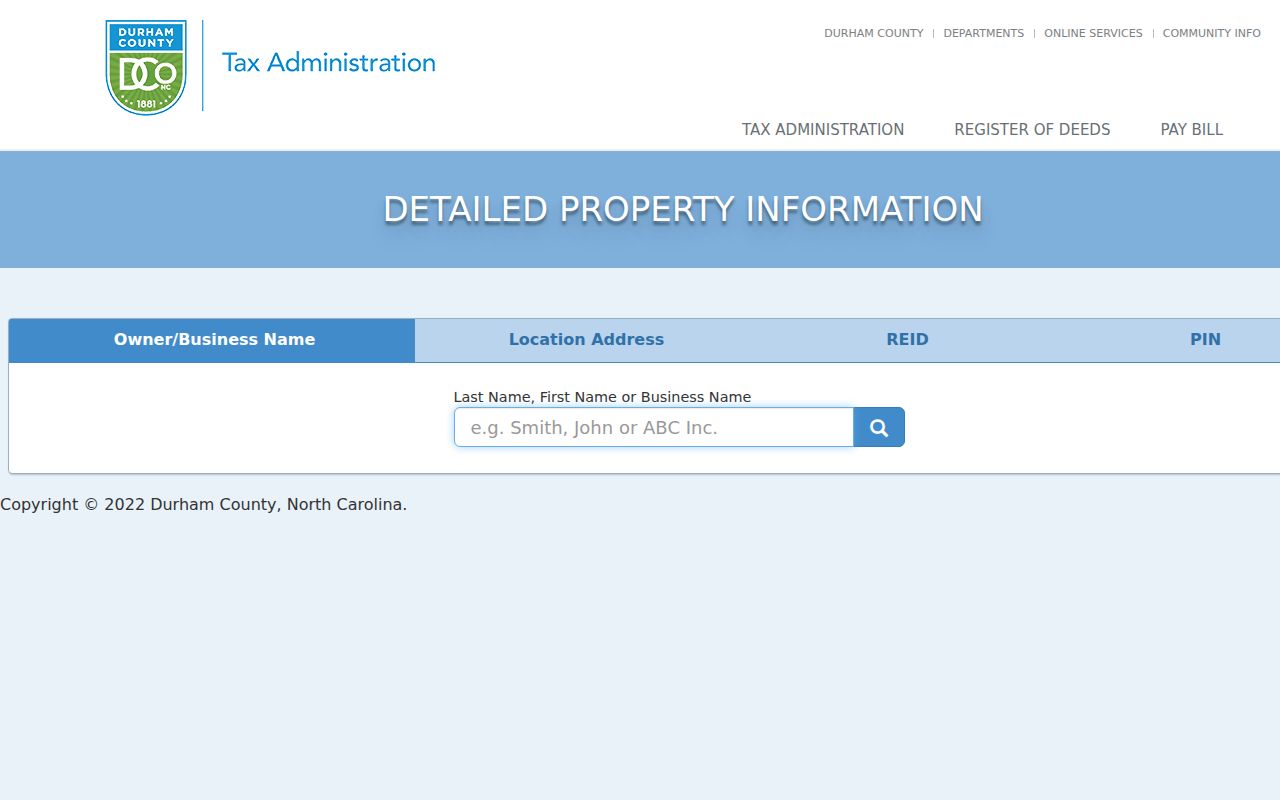
The form gives a Durham searcher several ways to reach the same parcel, which helps when a Durham street name or owner spelling has changed. Read the mailing address with care. It is where the Durham tax bill goes, not proof that the owner lives at the property.
Note: A deed recorded after January 1 may be newer than the owner shown on the current Durham tax roll.
Durham Deed Search Across Time
The parcel card supplies a deed book and page that can open a chain of title. In deed terms, a grantor gives or transfers an interest, while a grantee receives it. Search the grantee as a later grantor to move forward. Search the prior grantor and legal description to move back. A deed of trust usually secures financing and should not be read as an ownership transfer.
- Index
- A finding aid that points to a recorded instrument. It is not always the full document.
- Book and page
- The reference used to retrieve a filed deed, plat, or other recorded item.
- Legal description
- The land description that remains useful when a Durham street number changes.
- Certified copy
- An official copy authenticated by the custodian, unlike a plain portal print.
Durham ROD Self-Service supports party, role, instrument type, recording-date, book-and-page, and instrument-number searches. The online gateway does not replace the counter. Certified and historical indexes remain in the Durham office, and Historical Record, Condo, Corporate, Mortgage, and some Plat Book material can require staff help. Plat books 1 through 31 also have A and B divisions in specified books.
Durham Court Records by Name
North Carolina District Court and Superior Court serve Durham at the Durham County courthouse. Durham District Court handles misdemeanors, infractions, lower-value civil cases, domestic matters, and juvenile matters. Durham Superior Court handles felonies and higher-value civil cases. The Durham Clerk also acts in estates, guardianships, foreclosures, and special proceedings, making a deceased-person or heir search different from a standard civil case search.
The statewide eCourts Portal gives a Durham searcher Smart Search plus party, case-number, citation, county, case-type, and date filters. Choose Durham to reduce namesakes. Public results may show case number and style, party roles, filing date, status, attorneys, public charges, hearings, disposition, financial entries, and a register of actions. A docket is the chronological list of activity in a case.
| Durham court trail | What it can identify | Fallback |
|---|---|---|
| eCourts party search | Public civil, criminal, traffic, estate, and special-proceeding matches | Clerk counter or kiosk |
| Clerk estates file | Decedent, representative, heirs, filings, and dates where public | Estates counter |
| Durham federal court docket | Middle District parties, counsel, and filed events | Federal clerk or PACER |
Remote access does not expose every Durham document. Juvenile and adoption files, sealed matters, expunged records, protected addresses, and confidential family details can be absent or limited. For a likely Durham match, take the case number to a courthouse kiosk or ask the Durham Clerk for the public file and copy options.
Durham eCourts Record Era
Durham joined Odyssey and eCourts on April 29, 2024. North Carolina completed all-county conversion on October 13, 2025. Those dates describe the change in case-management systems, not the first date of every searchable Durham case. Older Durham material was migrated with different depths of history and document scanning.
A midnight timestamp on an event that predates the Durham launch may reflect conversion metadata rather than the real hour of an old filing. Compare it with the register of actions and the Clerk’s file. Archived paper cases can also take time to retrieve, so provide the party-name variants, rough filing year, case type, and case number when known.
Note: A Durham Portal hit is an index lead, not proof that a same-named party is the person being sought.
Durham Vital Records and Certificates
Durham County Register of Deeds issues local birth, death, and marriage certificates and marriage licenses through office, online, and mail channels. An account permits searches and uncertified prints in the Durham County system, but certified and historical records remain Durham office services. North Carolina Vital Records handles statewide birth, death, marriage, and divorce certificates. Divorce case files, however, stay with the Durham Clerk.
Durham vital records are not a free statewide name directory. Under N.C.G.S. § 130A-93, a certified copy is limited to the person represented, a spouse, sibling, direct ancestor or descendant, stepparent or stepchild, or an authorized agent or legal representative. A Durham death certificate may also serve a person making a legal determination of personal or property rights. Applications require identifying facts, relationship, identification, signature, and payment.
Review the North Carolina certificate order routes before viewing the application capture.
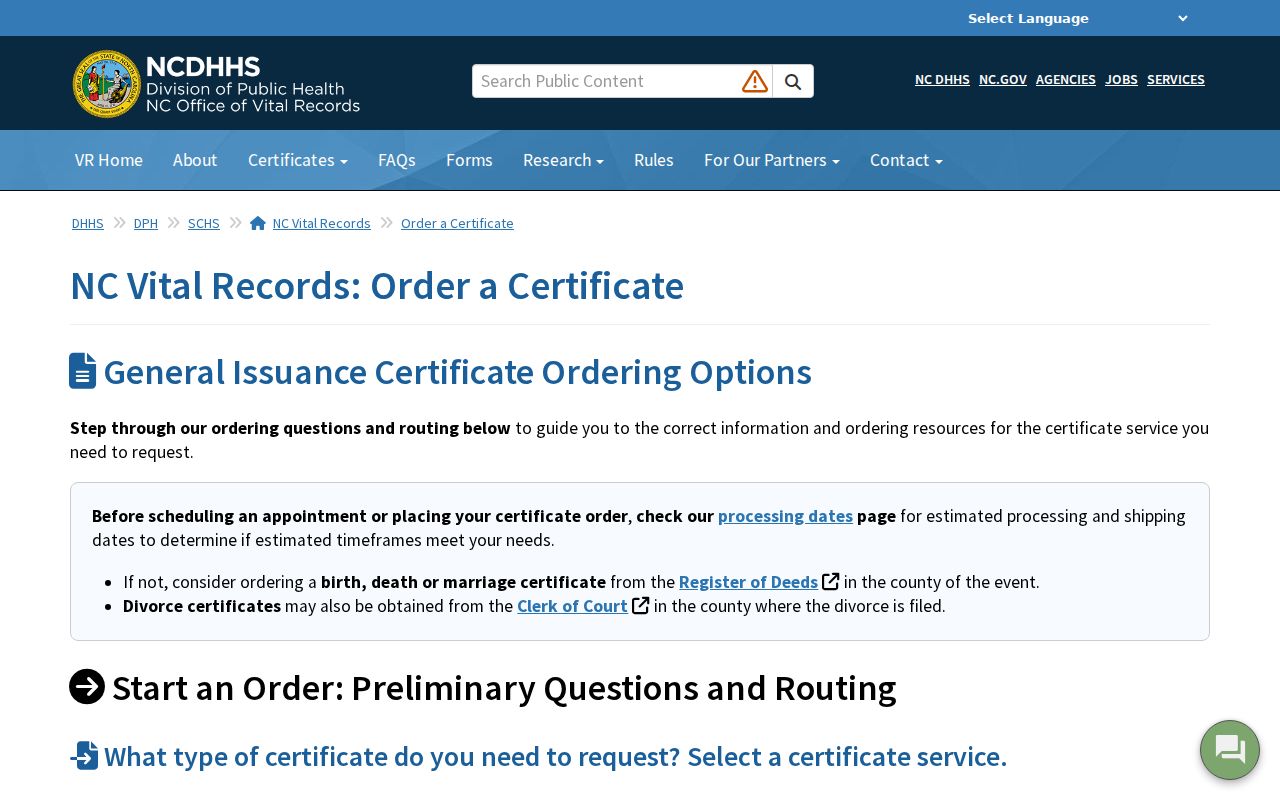
The order page separates certificate channels from open record searching. For Durham family history before statewide registration, turn instead to Durham County registers, the State Archives, Durham library indexes, newspapers, church sources, and family records.
Durham Library Search Beyond Portals
The North Carolina Collection on the third floor of Durham Main Library is the main fallback when a current web portal stops. Its holdings include annual Durham city directories back to 1903 and some 1892 volumes, Durham telephone books from 1927 and 1950 through 2016, Greater Durham cross-reference directories from 1962 forward, yearbooks, newspaper microfilm, announcement indexes, and a surname-indexed Biography File.
The North Carolina Collection genealogy resources draw on nearly 400 archival collections and more than 8,000 digital items. An old street address can be searched in a reverse directory, then checked in the annual directory’s street section. A name can move into the Durham Morning Herald or Carolina Times microfilm, a birth or death announcement index, a yearbook, or an obituary collection.
Some archival material is stored off site and needs advance notice. For events before Durham County was created in 1881, follow the deed, marriage, estate, or court jurisdiction into Orange or Wake County. The City of Durham existed before the county, so an early city reference can still pair with a parent-county legal file.
Durham Directory Records Overlap
Durham’s records form distinct eras. Nineteenth-century Durham directories, annual twentieth-century city volumes, Durham phone books, reverse directories, tax ledgers, rescanned deed books, cemetery files, and converted court dockets overlap without covering the same people. Choosing the bridge source by year is more effective than searching one modern database again and again.
A resident in the tobacco or mill era may appear through an occupation, spouse, firm, or shortened name. Black Durham research may lead through the Carolina Times, Beechwood Cemetery, the R. Kelly Bryant funeral-program collection, school yearbooks, NCCU archives, or historical directories that need careful explanation of period labels. Urban renewal also erased or changed streets in Hayti, West End and other neighborhoods, so a mid-century address may need an old map before it can be tied to a current parcel.
Maplewood Cemetery dates to 1872 and Beechwood to 1924. Their interment files and cemetery deeds make a Durham municipal people trail that sits apart from ordinary Durham County land deeds. No complete official citywide name portal was found, so Durham Cemeteries Management or the City Clerk is the direct fallback.
Note: Compare adjacent Durham directory years because a missed volume, move marker, widow notation, or spelling change can alter the apparent match.
Durham Estate and Heir Records
An heir trail often begins with a death notice or certificate lead, then moves to the Durham Clerk’s estate file. Public filings can identify the decedent, personal representative, heirs or devisees, counsel, dates, and property actions. A later estate deed at the Register of Deeds can show how an interest passed. Parts of an estate file may still be restricted, so ask for the separable public material.
Newspaper and obituary claims should be checked against the certificate, cemetery file, and court record. Family-supplied spellings and relationships may not match an indexed legal name. When no Durham estate appears, check name variants, the county of death or residence, and parent-county or State Archives series for the relevant year.
Durham Voter Lookup Boundaries
The official North Carolina Voter Search accepts first and last name, optional middle initial and birth year, county, and status choices. Select Durham County to reduce same-name results. A public result can include registration status, party affiliation, precinct, polling place, district assignments, and participation history.
Participation history shows that a voter took part in an election, never the person’s candidate or ballot choices. Birth date, Social Security number, and driver-license number are excluded from public voter data. Protected addresses are also withheld. A non-match may reflect spelling, a recent filing, a status change, a different county, or no registration, and does not prove that the person never lived in Durham.
North Carolina also publishes free weekly county and statewide files, while Durham County provides certain local reports and a special-data request route. The detailed field and file treatment belongs in the Durham voter records lookup.
Durham Custody and Registry Search
Current local custody starts with Durham Sheriff Detention Services. A booking can show custody status, charges, bond, court date, or release facts where published. It is not a conviction. Confirm the linked case and disposition through eCourts. State prison and community-supervision records use the North Carolina Department of Adult Correction offender gateway, while federal custody uses the federal locator.
The North Carolina offender registry offers statutory name and location search modes, shown in the captured official interface.
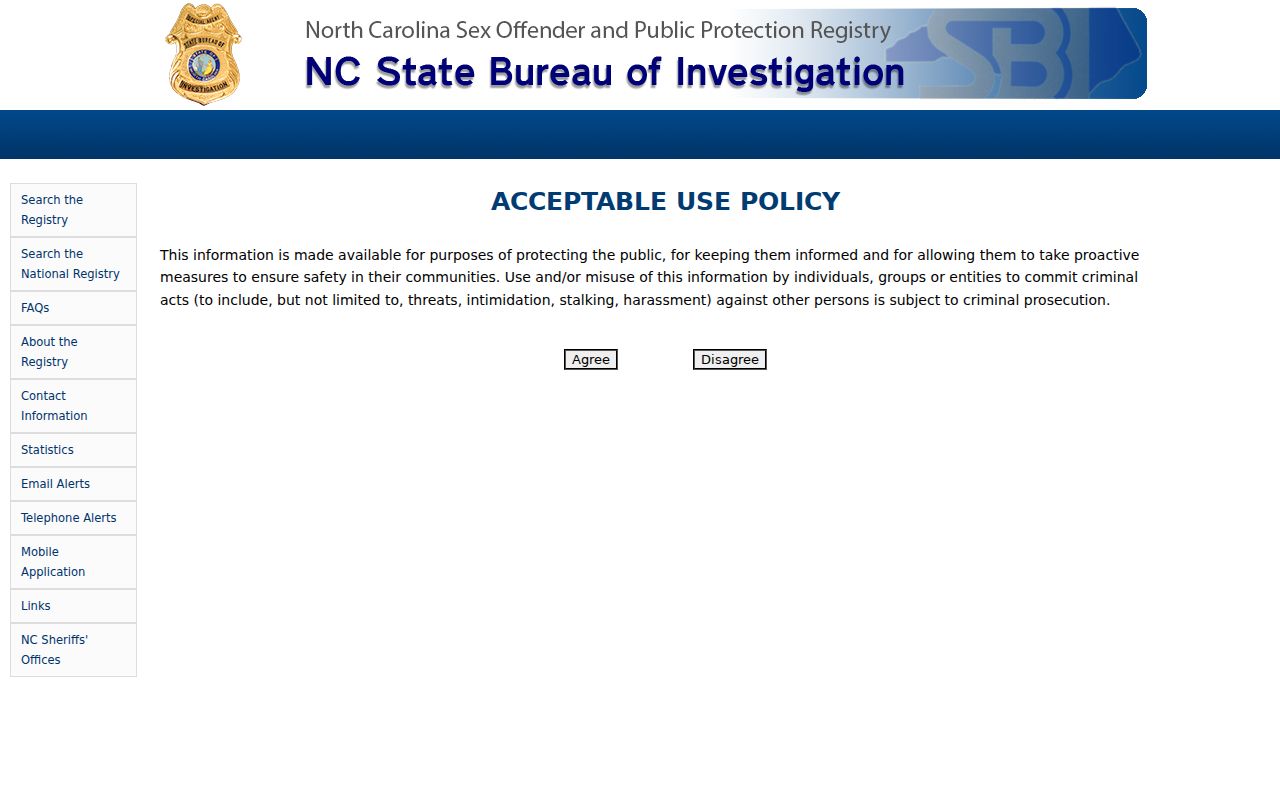
The registry can display identity, photograph, description, registration status, address, conviction, and compliance details allowed by law. It exists for public protection. Its information must not be used to threaten or intimidate anyone.
Note: Police incident information follows different disclosure rules from a court docket, and investigative details may remain restricted under state law.
Durham Business and Unclaimed Search
A Durham business name can lead to a person through the North Carolina Business Registration division. Entity results may identify the legal name, SOSID, status, creation date, registered agent, offices, company officials, annual reports, and filed documents. A registered agent is the legal contact for service and is not necessarily the owner.
Assumed names filed from December 1, 2017 forward are in the statewide system. Older Durham assumed names remain with the Register of Deeds. Permits and board-issued professional licenses can add a project, trade, status, or public discipline record. North Carolina ended general local business privilege licensing authority in 2015, so there is no complete City of Durham business-license roll.
Search the official NC Cash owner-name lookup before viewing its capture.
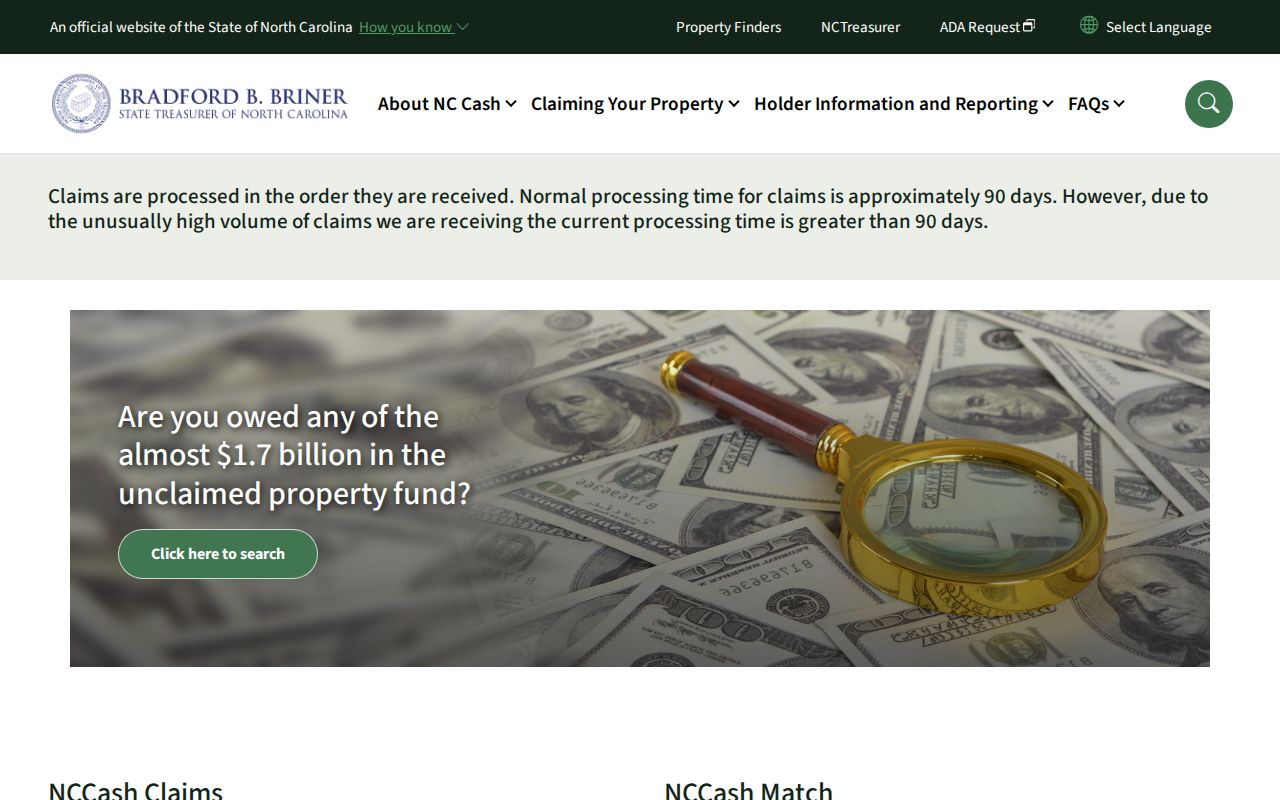
An unclaimed-property match can tie a person or estate to a former locality and reporting business. Searching is free, while a claim needs proof of identity or authority. The listing supports a past financial-address link, not a current Durham residence.
Private Durham Records and Lawful Use
Public does not mean that every Durham record is open online. Juvenile and adoption files, sealed and expunged matters, confidential vital certificates, protected voter addresses, motor-vehicle personal data, sensitive identifiers, and much criminal investigative material stay closed or limited. A custodian may redact protected facts and release the rest.
The North Carolina Address Confidentiality Program gives qualifying survivors and household members a substitute address and mail forwarding. Public sources must never be joined to defeat that protection. Recorded images also should not be treated as permission to republish an exposed identifier.
| Source type | Strength | Key limit |
|---|---|---|
| Official custodian record | Direct index, file, or certified copy | Coverage, redaction, and access rules vary |
| Library or archive source | Strong historical context and year-by-year links | May need in-person or advance access |
| Commercial compilation | Can surface a possible lead | May be stale, mixed, incomplete, or wrong |
Requesting Offline Durham Records
North Carolina Public Records Law, Chapter 132, generally requires inspection and copies as promptly as possible, but it sets no single statewide day count. Inspection is ordinarily free. Copy fees may reflect actual cost, and extensive technology or staff work can support a reasonable special service charge. Ask for an estimate before broad work begins. Identify the custodian, search its portal and prior releases, and provide name variants, a date range, address, and any case, parcel, report, book, page, or instrument number. Request the smallest identifiable set and state whether inspection or an electronic copy will work. If access is denied, ask for the legal basis and any separable public portion.
County departments use the Durham County records request route, but the Sheriff, Register of Deeds, elections office, and courts use their own channels. City records go through the City portal and are not accepted by phone. Court files go to the Clerk. Older county and judicial series may require the State Archives or the Durham library collection.
The official map also matters when an address is the starting point. Open the Durham city and county GIS before viewing the captured map interface.
The map links a street location to its parcel and jurisdiction, keeping a Durham request from going to the wrong city or county office. Once the parcel and keeper are known, the offline request can name a concrete record instead of asking for every file about a person.